

Pollinator Week Kicks Off Season of Creation June 15th
Come Learn About Supporting Mason Bees in our home gardens
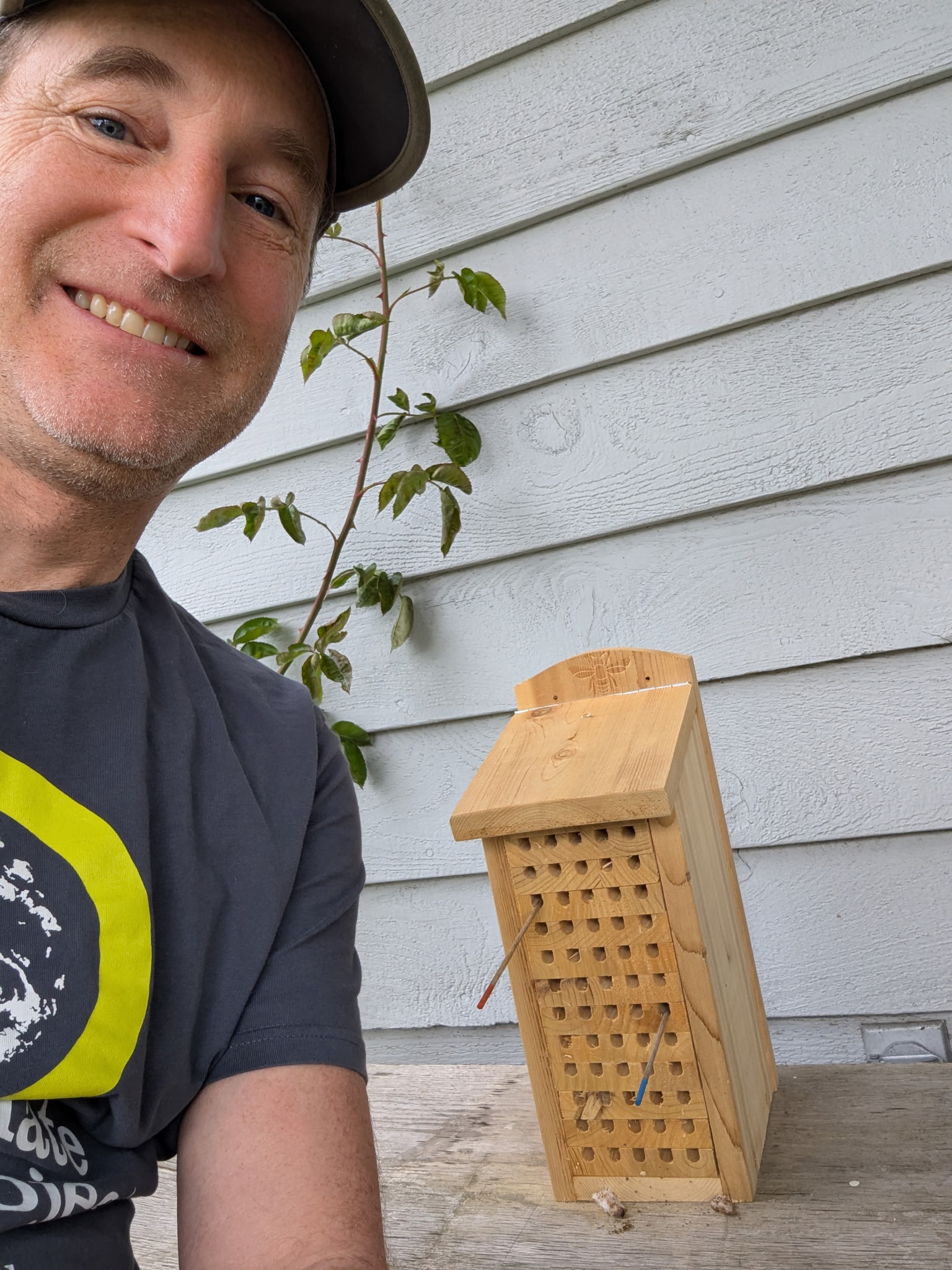
Come hear Michael Truog talk about providing housing for native mason bees June 15th after worship on the Peace Patio.
As we enter our Season of Creation this month, we also honor Pollinator Week, a celebration of the vital role that pollinators play in our ecosystems, economies, and agriculture. This year’s theme is “Pollinators Weave Connections,” a reflection on the interconnectedness of our world. It’s a lovely parallel to our focus for this Season of Creation—Robin Wall Kimmerer’s inspiring book, The Serviceberry: Abundance and Reciprocity in the Natural World.
The serviceberry, one of the earliest spring bloomers, is an essential food source for pollinators. Its shallow white flowers, rich with nectar and pollen, are followed by berries and eventually seeds, both feeding dozens of bird species. Among the pollinators drawn to serviceberry flowers are native Mason Bees, who are extremely effective pollinators thanks to how they coat their tiny bodies with pollen.
Bees, butterflies, moths, bats, beetles, and hummingbirds are essential creatures, responsible for one out of every three bites of food we eat, according to the USDA. But many pollinator populations are in decline mostly due to lost feeding and nesting habitats. Pollution, the misuse of chemicals, disease, and changes in climatic patterns are all contributing to shrinking and shifting pollinator populations.
Which is why we have the Peace Pollinator Project! We’ve talked and written frequently about how we can all help these little superheroes by adding native plants to our gardens, eliminating pesticides and weed killers, and “leaving the leaves” come fall. This year, we’re focusing on how we can help native Mason Bees, beginning with a talk from Michael Truog about his experience providing housing for mason bees.
“I’ve been housing Mason bees for a few years now, they are super magical and effective at pollinating,” says Michael. “They are super gentle (they don’t sting anyone) and are easy to manage.”
Later this year, we’ll talk about how leaving your garden a bit messy in the fall protects nesting bees and, during the winter, we’ll build some mason bee houses. Meanwhile, go visit the four Serviceberry trees lining our 39th Ave. SW sidewalk!
— Deb Hagen-Lukens for Creation Care
More information about Creation Care at Peace Lutheran Church:
- What is Creation Care?
- Creation Care Team at Peace Lutheran Church
- (Archive of Creation Care-related Announcements)
- Care of Creation is a goal of the Evangelical Lutheran Church in America (ELCA): Caring for Creation – Evangelical Lutheran Church in America (elca.org)

 We are a

 What does this mean?
