Archive for the ‘Archive’ Category

Pastor’s Pen for September 2019

Comments Off on Pastor’s Pen for September 2019

Luther & Lilian Anderson December 1946

Luther & Lilian Anderson, December 1946

I planted, Apollos watered, but God gave the growth.

So neither the one who plants nor the one who waters is anything, but only God who gives the growth.

– 1 Corinthians 3:6-7


Beloved of God,

The Letter of Call from the Lutheran Board of Home Missions was dated January 14, 1944, and it was directed to a seminarian in his senior year at Augustana Theological Seminary in Rock Island, Illinois.  Though it would be six months before the candidate was approved for ordination, he’d already been identified by the Board as a good fit for a new mission start that was to be established in the “southwest section of the city of Seattle.” Starting annual salary:  $2,100; with a housing allowance “not to exceed $60 a month for rent.”  The seminarian’s name? Luther Anderson.

Luther said YES to the Call, and on September 10, 1944, he conducted his first worship service as the mission’s founding pastor.  There was no building—that would come two years later.  Worship was held in an E. C. Hughes School portable classroom.  Years later, on the occasion of the congregation’s 50th anniversary, Pastor Anderson shared this remembrance:

“The first service was memorable. It was my first service as a young ordained pastor. Eighteen attended that first worship; there were only 15 when I pronounced the benediction. One lady left early to fulfill a promise to her husband, another fainted and was taken home! I wondered what my ministry was to become.”

It was while serving Peace that Luther met and then married his wife Lilian in July 1946.  (Lilian, like Luther, was a child of a Lutheran pastor.  She was born in China and lived there for many of her early years.)  A new Call in 1949 took Luther and Lilian from Peace Lutheran to First Lutheran Church in East Orange, New Jersey, where he served until 1960.  In 1960, he accepted a Call from First Lutheran Church in Fort Lauderdale, Florida, where he remained until retirement in 1985.  Retirement, however, didn’t last long.  In 1986 he accepted a call to serve as Assistant Pastor at All Saints Lutheran Church in Tamarac, Florida; a position he served for the rest of his life. Pastor Anderson died in April of 2002, and two months ago we received word from their son Eric Anderson that Lilian passed away on June 12th of this year. We also received another communication from Eric.  It came while I was on vacation—and it came as a total surprise: Luther and Lilian Anderson had left a bequest to Peace in their will.   Eric sent paperwork for us to fill out, but we still didn’t know the amount of this legacy gift.  On August 20, I sent Eric the following email correspondence to Eric:

We are both surprised and grateful that your parents Luther and Lilian felt such affection for Peace that they would choose to include the congregation in their final tithe.  What a tremendous gesture!

We are in the midst of our 75th capital campaign right now, building on the momentum of the congregation’s 75th anniversary.  This all comes to a culmination on Sunday, November 24th.  A major project we’re engaged in at present is the updating and refurbishment of the narthex.   We want the building, both inside and out, to reflect the vibrant nature of our growing community.  Our narthex redesign effort is aimed toward that goal.  I think that utilizing your parents’ legacy gift to support this effort would be very fitting and would further serve to inspire others.  Can you tell us the scope of your parents’ gift?    Depending on the size of their gift, there may be additional areas where their gift could be applied.  Thank you again.  Yours in Christ,

Erik Kindem

That evening, after a council meeting in which the question of capital project funding figured prominently, I checked my email.  Eric Anderson had responded.  The amount of Luther and Lilian’s final tithe gift to Peace would be $27,083 (!!!)   Immediately, I wrote back:

WOW!  What astounding generosity!  I’m overcome.  After finishing our monthly church council meeting I found your email in my inbox.  What a tremendous gift!

The God-timing of Luther and Lilian’s gift is amazing.  September 10th will be the 75th anniversary of Luther’s first worship service at Peace.  I wish I could tell both him and Lilian that Peace, after ups and downs, is a joyous and vibrant community with a keen since of faith-centered welcome and a strong community outreach beyond its doors.  Your parents’ final act of generosity will be such a powerful witness and testimony to the current people of Peace.  We look forward eagerly to receiving the gift.  Our desire will be to put the gift to work right away in the remodeling effort I described previously, which builds on the very physical structure that your father was instrumental in establishing…  Soli Deo Gloria!  – Erik Kindem

In his first letter to the Corinthians Paul reminds that community who gets the credit when good things happen in ministry:   “I planted, Apollos watered, but God gave the growth. So neither the one who plants nor the one who waters is anything, but only God who gives the growth.”

The seeds of what would become Peace Lutheran Church were sown before Luther Anderson arrived on the scene.  (See my Pastor’s Pen article from September 2018 as well as the History of Peace Series available on our website.) And after his time of watering those seeds, the continuing formation of Peace was passed on to other leaders, each of whom in the ensuing decades brought their own gifts to bear.  And God gave the growth.  No one could have predicted that Peace would hold such a strong place in the Andersons’ hearts 75 years after Luther’s ministry here began…no one but God.

Luther and Lilian Anderson knew something about the generosity of God.  No doubt they experienced it growing up in the household of faith.  But I wonder if, as they witnessed Peace families offering time, resources, and sweat equity to establish this congregation, a new layer of understanding about God’s generosity didn’t cement itself within them.

Through their years in ministry after leaving Peace, their knowledge of what God could accomplish with and through them and the congregations they served continued to grow.  During the 25 years they served in Fort Lauderdale many changes were afoot in the larger world, as millions of people from across the US and around the world came to call Florida home.  As Fort Lauderdale grew and changed during this period, so did Pastor Anderson’s vision of the ministry. He expanded the influence of the church outside its walls, starting one of the first Cooperative Feeding Programs in the area, and became an integral player in refugee relocation programs—particularly those dealing with Asian refugees. Over his lifetime Pastor Anderson was instrumental in the resettlement and sponsorship of well over 250 refugees from around the world.  And he participated in numerous organizations as part of his social ministry.

Luther and Lilian knew that the gifts they’d received and the assets they’d saved through lifelong, faithful stewardship were meant to be passed on.  Their tremendous legacy gift supporting the mission of Peace affirms that truth.  75 years later, their affection for this congregation and its mission rings out loud and clear… “And God gave the growth.”  

As we enter the final three months of this 75th anniversary year, culminating in our celebration on November 24, there are many opportunities for giving.  I hope the Andersons’ example will inspire you—as it has me—to reach more deeply and participate more fully in the efforts to equip our facilities for faithful ministry in the next 75 years.


The LORD appeared to Abraham by the oaks of Mamre, as he sat at the entrance of his tent in the heat of the day. He looked up and saw three men standing near him.  When he saw then, he ran from the tent entrance to meet them, and bowed down to the ground.  He said, “My lord, if I find favor with you, do not pass by your servant.  Let a little water be brought, and wash your feet, and rest yourselves under the tree.  Let me bring a little bread, that you may refresh yourselves, and after that you may pass on—since you have come to your servant.”  And they said, “Do as you said.”

– Genesis 18:1-5

Beloved of God,

This story from Genesis shows Abraham to be the consummate host of three unexpected guests who show up of the blue.  Abraham offers them food and refreshment, and when they give him the green light, he sends his servants scurrying to make it so.  Only later is it revealed that these unexpected guests bring crucial news about the promise Abraham and Sarah had received from God— that they would be the progenitors of a whole new people.  These guests, later tradition suggests, are none other than the Holy Three.

We all have stories of hospitality—received or given—and how they have changed us.  As I write, I’ve just returned with Chris from our 20th anniversary get-away to an Italian Villa bed and breakfast (in Tacoma of all places!), where we experienced the marvelous hospitality of our hosts Toni and Martin.  While visiting with other guests during a sumptuous breakfast the morning of our anniversary, we received a recommendation for a small, intimate restaurant where we could celebrate in style.  We took the recommendation and ran with it and, boy, are we glad we did, for it added a wonderfully rich layer to our celebration and to our appreciation of excellent hospitality.[1]

Twenty-two years ago this month, while driving back from the Midwest after dropping my son Nathan off at college, I was the recipient of another unforgettable experience of hospitality—one totally unexpected.  After putting my “pedal to the metal” on a marathon leg of driving with the goal of getting home to Portland as soon as possible, I arrived at Coeur de Alene, Idaho, thoroughly tuckered out.  Unable to keep my eyes open any longer, but not wanting to shell out for motel room, I pulled off I-90 at a rest stop just east of town.  Finding a payphone (no cell phone back then!) I made a call to my still-newish girlfriend Chris Hauger.  All I got was her voicemail.  So I let her know that was taking a break at a rest stop outside of Coeur de Alene, too tired to drive any further.

Earlier that summer, Chris had occasion to introduce me to dear family friends Jeanne and John.  Chris had met Jeanne and her children in Ethiopia when she was a girl and their families had stayed in close touch ever since.  Jeanne and John, it turns out, lived in Coeur de Alene, and when Chris received my phone message she —unbeknownst to me—went into high gear.  While I was taping newspapers over the windows of my van and preparing to lie down for a few hours, Chris was reaching out to Jeanne and John by phone.  She told John how concerned she was for me; that I was at a rest stop somewhere outside of Coeur de Alene; that I needed a safe place to get some rest before continuing on.  John assured Chris: “There is only one rest stop it could be and I know just where it is.”  Before they hung up, they’d hatched a plan that John would search me out using Chris’ description of my van, and offer me lodging at their home for the night.

As I lay in the back of my Dodge Caravan behind papered windows—just on the edge of sleep—with nasty visions whirling about in my exhausted brain of what might happen if somebody tried to break into my van while I slept, I was startled by a loud knocking on my front window.  Bolting up quickly as adrenaline flowed, I prepared myself for whatever I might encounter on the other side of that window.  Finally, opening my door cautiously, I looked out and there was a big burly man with a mischievous smile on his face.   Holding out a phone, he said, “IT’S FOR YOU.”

It was John.  And the voice of the other end of the phone?  It belonged to Chris.  “John and Jeanne are ready to put you up for the night, Erik.  Is that alright?”  Alright?!  YES—AND THEN SOME!  So I pulled the papers from my windows, followed John to their house in town, and was welcomed into the safety and comfort of their home for the first time, treated like a long lost son.  The next morning, after a hardy breakfast, I took my leave, deeply appreciative of Jeanne and John’s hospitality and mindful once more of the way grace can show itself in our lives when we least expect it.

From that time on, John and Jeanne’s home has been a regular way-station for us as we’ve journeyed—first as a couple and then with our children—to Kindem Family Reunions in Whitefish, Montana.  This year, on our way back from Whitefish at the end of July, we’ll be stopping in Coeur de Alene once more.  This time so we can attend Jeanne’s memorial service; where sadness at her passing will be mingled with gratitude for the deep friendship and hospitality which has been such an incalculable gift through the years.

Wherever your summer takes you, I pray for experiences of hospitality—received and given; for sacred encounters in which grace becomes known.


[1] The restaurant, in case you’re interested, was Over the Moon Café, located in Tacoma’s Opera Alley.

bee on flowerSeason of Creation Returns!

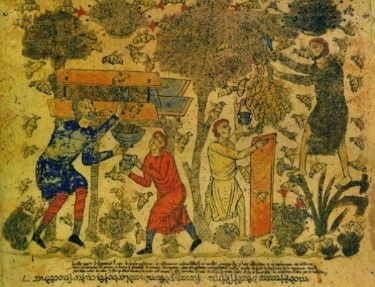
On June 16 and 23 we will mark a two week long Season of Creation during 9:30am worship. Our focus this year is on the role of bees and other insects in the pollination drama that unfolds in gardens and fields and orchards throughout the Northwest, across the continent, and around the world. A significant portion of the foods that make their way to our tables are pollinated by bees. Without the work accomplished by bees and other pollinators, our food supply and the kinds of foods we eat would be impacted significantly. During this season we use texts and resources to lift up the sacredness of our relationship with the creatures with whom we share this planet home and we recommit ourselves to our God given vocation as Earthkeepers.

SPECIAL GUESTOn June 16 local entomologist and teacher Jen Paur (tinyscience.org) will join us and will introduce us to some of the marvelous pollinators and other creatures with whom we share this planet home.


Join us as we celebrate LIFE!

PENTECOST WORSHIP AND RITE OF CONFIRMATION – JUNE 9 @ 10:30am

On this joyous day, five young people of our congregation will make public profession of their faith and affirm their baptisms: Hailey, Kai, Dan, Hudson, and Phoebe.  A reception will be held in the fellowship hall downstairs following worship.


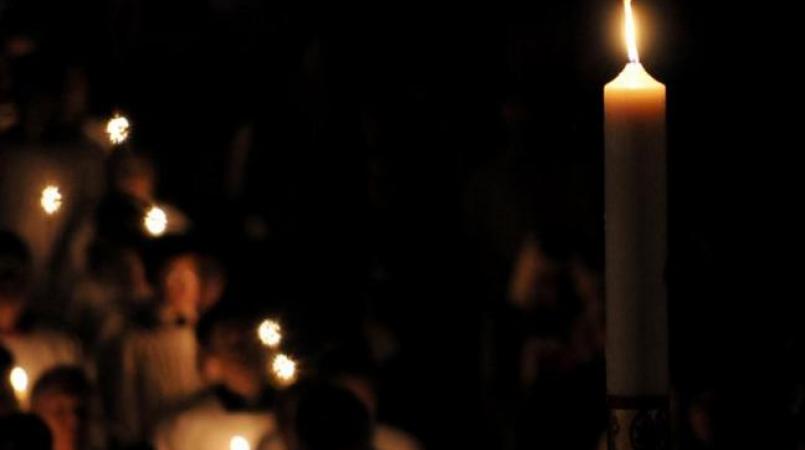
“We sing the glories of this pillar of fire, the brightness of which is not diminished even when its light is divided and borrowed. For it is fed by the melting wax which the bees, your servants, have made for the substance of this candle.”

– From The Exsultet, sung each year at the Great Vigil of Easter

“Go to the fields and gardens, and you shall learn it is the pleasure of the bee to gather honey of the flower. But it is also the pleasure of the flower to yield its honey to the bee.  For to the bee a flower is the fountain of life.  And to the flower a bee is a messenger of love.”

– Kahlil Gibran, The Prophet

Beloved of God,

“The bees, your servants…”  I love that line—and listen for it each time the Exsultet is sung during the Easter Vigil.  Truer words were never spoken, as I’ve been learning of late while reading two books that trace the natural history of bees: BUZZ: The Nature and Necessity of Bees, by Thor Hanson, and Bee Time: Lessons from the Hive, by Mark Wilson.

The first bees evolved from wasps about 125 million years ago—soon (in geologic time anyway) after flowering plants begin to appear.  These primordial bees made the transition from being predators to being gatherers of nectar and pollen from flowers—an innovation that initiated an explosion in the diversity and abundance of flowering plants and bee species, enhancing the survival of both.  This exchange between bees and flowers, as Wilson points out, is pretty basic:  Flowers provide sugar in nectar and protein in pollen; and bees transfer pollen from flower to flower as they collect the nectar, thereby fertilizing the flower. (Gibran, in the quote above, gives this utilitarian arrangement an eloquent touch.)

One delicious byproduct of this encounter—honey—has served as an important food source for human beings ever since our pre-human ancestors began walking upright on African soil.  In fact, recent studies of early human diets suggest that a significant source of calories, trace vitamins and minerals upon which our forebears depended for survival came from “hunting” honey—a practice that continues in many parts of the world today.  Over the eons, human beings have been fascinated by the complex cooperation that allows honey bee colonies to thrive.   Along the way we’ve discovered many uses for the byproducts of bees, including the beeswax from which the candles we use in worship are made.  Our Scriptures turn to bees to capture holy things and sacred promises: The psalmist enlists honey to help describe the treasure which is God’s word: “The ordinances of the Lord are true and righteous altogether. More to be desired are they than gold, even much fine gold; sweeter also than honey, and drippings of the honeycomb.” (Ps 19:8-10) And to extol the virtues of the Promised Land—“a land flowing with milk and honey.”

But the more than 20,000 species of bees in our world, with their wildly diverse patterns of living, have a role which goes far beyond satisfying the sweet tooth, extending the daylight, and embroidering literature. They are vitally important to human survival because of their pollinating role in agricultural and natural ecosystems.  Approximately one-third of all crops benefit from or are dependent on insect pollination—mostly by bees, a reality to which the vast majority of us, unless we’re farmers or orchardists, are oblivious.  When we bite into an apple or crunch down on a handful of almonds, the image of the humble bee likely doesn’t come to mind, nor a sigh of “thanks” escape our lips—but they should!

The collapse of honeybee colonies in recent decades (dubbed “colony collapse disorder” or CCD) along with the accelerating disappearance of less common bee species and the endangerment of others, has caught the world’s attention.  And that of our worship planning team.  This decline is not caused by a single factor but by a complex mix of factors, including the widespread use of insecticides and pesticides, disease outbreaks, and the reduction in the diversity and abundance of nectar- and pollen-producing flowers.   A crisis is afoot that portends massive implications for our world.  As we mark this month’s Season of Creation at Peace we’ll be learning more about bees and pollinators, and the role they play in our fields, gardens, and orchards.  All this in the service of revitalizing our God-given vocation as Earthkeepers.  Come learn with us from the bee how to be more faithful servants!


On June 1 at 7:30pm The Northwest Firelight Chorale will perform For the Love of Ireland: Songs from the Emerald Isle and Its Celtic Neighbors” at Peace Lutheran. Join the 65-member group, whose mission is to “invite the opening of people’s hearts to love and healing through inspired rehearsals and performances of soul-stirring music,” as they share music inspired by their tour to Ireland last summer. You’ll tap your foot to rollicking jigs and reels, enjoy favorites from famed Irish groups Celtic Woman and Celtic Thunder, and revel in a good ol’ Irish sing-along! General admission tickets $22; youth $12. www.nwfirelightchorale.org.

On June 2nd graduating high school seniors Katharine Menstell, Noah Marx, and Ginny Sunde will be receiving $1,200 Peace Scholarships and will share in preaching responsibilities at the 10:30am Worship Service.  From 2005 – 2019, seventeen graduates have  become Peace Scholars.  All previous Peace Scholars are invited to attend.

In partnership with Earth Ministry, Peace Lutheran Church is hosting a community screening of “The Devil We Know” on JUne 19 @ 7:00pm. This stirring documentary tells the story of 3M and DuPont corporations introducing harmful PFAS chemicals into the environment. PFAS are highly persistent nonstick chemicals, such as Teflon, that are linked to very serious, sometimes lethal, health issues. These toxic chemicals are now commonly found in our households and drinking water, making it a moral issue for the health of our families and all creation. The good news is that Washington State is already a leader in addressing these toxic PFAS chemicals – remember that we banned PFAS from food packaging in 2018! After the screening, representatives from Earth Ministry and Toxic-Free Future will share how you can take action to help Washington continue to lead the phase out of PFAS chemicals. There will also be continued action opportunities later this year. We invite you to join us as we build awareness about the dangers of PFAS through this screening and put faith in action to remove them from our homes and environment.

There in God’s garden stands the Tree of Wisdom, whose leaves hold forth the healing of the nations:

Tree of all knowledge, Tree of all compassion, Tree of all beauty.

Thorns not its own are tangled in its foliage; our greed has starved it, our despite has choked it.

Yet, look! It lives!  Its grief has not destroyed it nor fire consumed it.

See how its branches reach to us in welcome; hear what the Voice says, “Come to me, ye weary!

Give me your sickness, give me all your sorrow, I will give blessing.”

There in God’s Garden, #342 in Evangelical Lutheran Worship

Words by Pécselyi Király Imre (Hungary, c. 1590—c. 1641)

Beloved of God,

Toward the end of the film masterpiece, Return of the King, the last of three films based on The Lord of the Rings trilogy by J.R.R. Tolkien, as the dark minions of Mordor mass for battle and the end of all that is good seems inevitable, the story takes us to the White City of Gondor—Minas Tirith.  Minas Tirith represents the nations’ last, best hope, but the steward of its throne has tipped the scale toward madness, and now the fate of the whole inhabited world lies on a knife’s edge.  At the pinnacle of the alabaster city’s mountain bulkhead, in the plaza high above the plain where the decisive battle will be joined, stands the White Tree of Gondor.  It is a symbol of the nation’s long kingly heritage, its dignity, wisdom, endurance and fruitfulness.  But this once great tree has lost all its leaves, and the bare limbs that remain seem to portend that the noble tree, like the nation itself, is destined for oblivion.  But as the siege of Gondor begins and casualties mount, we watch as, inexplicably, a single white blossom on the tree—unheralded and unnoticed—opens; a sign that, in spite of all evidence to the contrary, all is not lost, and a future with hope is still a possibility. It’s a stirring moment but one that is easily missed.

This month the Science-Policy Platform on Biodiversity and Ecosystem Services (IPBES) of the United Nations issued a summary about the state of species on our planet home that was hard to miss.  It was shocking.  Elements of the natural world—both plants and animals—are declining globally at rates unprecedented in human history.  As many as one million species are under threat.  In addition, the rate of species extinctions is accelerating, with grave impacts on people around the world now likely.  “The health of ecosystems on which we and all other species depend is deteriorating more rapidly than ever,” says IPBES Chair, Sir Robert Watson.  “We are eroding the very foundations of our economies, livelihoods, food security, health and quality of life worldwide.”[1]  What are we to do with this information?

From earliest days, Easter has been celebrated as the “8th day of creation” because in raising Christ from death God has ushered in a whole new world.  Baptismal fonts through the ages have often taken on octagonal shapes because of this very recognition. Questions that God’s people keep alive during this Easter season include:

  • How do we as a community which gathers around the Risen Christ live the resurrection life?
  • How can we live in such a way that our choices and commitments mirror the risen life to which our Lord calls us?
  • How can new patterns of living support the renewal that his rising presages?

These questions pertain to the choices we make each day and are firmly rooted in our care for the neighbor—which includes the many species with whom we share planet Earth and on which our own survival as a species depends.

One of my new(er) favorite hymns is the one quoted above, by Hungarian hymnwriter Pécselyi Király Imre. Imre, a Lutheran pastor, lived during the Reformation era, a time of tumultuous change when every strata of society was undergoing sea change. Originally fashioned as a meditation on Jesus’ seven last words from the cross with fifteen stanzas,   contemporary hymnwriter Erik Routley provides a paraphrase of six of those stanzas in the form we have in our hymnal. Using the great image of the Tree as both Cross and Christ, the hymn lifts up the healing and saving role of the crucified and risen One while at the same time demarking the “thorns” that threaten the Tree. What I find particularly moving about this hymn is how it speaks truthfully about the threats we face without allowing those threats to undercut the testimony of hope. Like that single bloom on the White Tree of Gondor, this hymn testifies to hope at a time when hopelessness threatens to overwhelm.

The IPBES report from a group of global scientists includes a call to action. It tells us it’s not too late to make a difference, but only if we start now at every level from local to global. “Through ‘transformative change’, nature can still be conserved, restored and used sustainably – this is also key to meeting most other global goals. By transformative change, we mean a fundamental, system-wide reorganization across technological, economic and social factors, including paradigms, goals and values.” The report omits the term “spiritual” from the list of factors, but for us who follow in Jesus’ footsteps it is essential, and in fact grounds, informs, and abets all the others. As the stories from the book of Acts make clear throughout this Easter season, Christians are people primed for transformative change! The incarnation and the resurrection of Christ affirm the sacredness of this Earthly realm, and the pouring out of the Holy Spirit on God’s fledgling people exemplifies God’s commitment in Christ to “make all things new.” For followers of Christ, despair is never an option; hope gives shape to every dream and endeavor we set our hearts to. With crisis in the natural world looming, we have the opportunity and obligation to get out in front and lead by example.


[1] You can find the summary here: https://www.un.org/sustainabledevelopment/blog/2019/05/nature-decline-unprecedented-report/

UP FOR ARTS, University Place, Washington Presents:

The American Tenor, Jon Lackey & Pianist and International Steinway Artist, James Jelasic

In concert Friday, April 26th, 2019 at 7:00 pm University Place Civic/Library Atrium 3609 Market Place (36th and Bridgeport Way W), University Place, WA

Event Info: (253) 565-8466 Price: $15 adults; $5 students; free for UP for Art members. Tickets at door.

Event Website: www.upforarts.org Sponsored by Symphony Tacoma and Skelley Pianos