Archive for the ‘Archive’ Category

Feeding of the 5,000 by Eric Feather. Used by permission of the artist.

Feeding of the 5,000 by Eric Feather. Used by permission of the artist.

Welcome to Peace – we’re glad you’ve found us!

Today is the first of five Sundays with gospel readings from John 6, the first four of which focus on Jesus as bread of life. Today Jesus feeds thousands of people with five loaves and two fish.

What we have, what we bring to Jesus’ table, seems like it is not nearly enough to meet all the needs we see around us. But it is not the adequacy of our supplies or our skills that finally makes the difference: it is the power of Jesus working in the littlest and least to transform this world into the world God desires, a world where all the hungry are satisfied.

You can find a recording of our Live Stream service for July 25 by clicking on our YouTube Channel.

A PDF of the worship guide can be downloaded here: Pentecost 12B 2021 7.25.21 livestream bulletin 

Celtic cross LWWelcome to Peace – we’re glad you’ve found us!

Mark’s gospel makes clear how great is the press of the crowd, with its countless needs to be met, on Jesus and his disciples. Yet in today’s gospel Jesus advised his disciples to get away and rest, to take care of themselves. Sometimes we think that when others are in great need we shouldn’t think of ourselves at all; but Jesus also honors the caregivers’ need. We are sent from Christ’s table to care for others and for ourselves.

Our Pass the Hat partner this month is RECONCILING WORKS. Since 1974, ReconcilingWorks has advocated for the full welcome of LGBTQIA+ Lutherans in all aspects of the life of their Church, congregations, and community. In relationships built through outreach and education, ReconcilingWorks shares Christ’s message, the Gospel, which is for everyone equally.

You can find a recording of our Live Stream service for July 18 by clicking on our YouTube Channel.

A PDF of the worship guide can be downloaded here: Pentecost 11B 2021 7.18.21 livestream bulletin

Picture1Welcome to Peace – we’re glad you’ve found us!

When Amos reports his vision of God judging Israel for its mistreatment of the poor, he becomes a threat to the power of the priests and the king. John the Baptist also speaks truth to power, and Herod has him killed. In Herod’s fear that Jesus is John returned from the dead, we may hear hope for the oppressed: all the prophets killed through the ages are alive in Jesus. We are called to witness to justice in company with them, and to proclaim God’s saving love.

You can find our Live Stream service for July 11 by clicking on our YouTube Channel.

A PDF of the worship guide can be downloaded here: Pentecost 10B 2021 7.11.21 livestream bulletin

cover artWherever this Independence Day found you, we pray that God blessed you with the freedom that has been won for us by Christ’s glorious resurrection from the dead.

Today in Mark’s gospel we hear how Jesus sends his disciples beyond the threshold of what they’ve known to bear the message of God’s reign.  Our guest preacher, Rev. Dr. David Hahn of the NW Washington Synod staff, looks carefully with us at this theme in his message to us.

You can find a recording of this Live Stream service by clicking on our YouTube Channel.

A PDF of the worship guide can be downloaded here: Pentecost 9B 2021 7.4.21 livestream bulletin

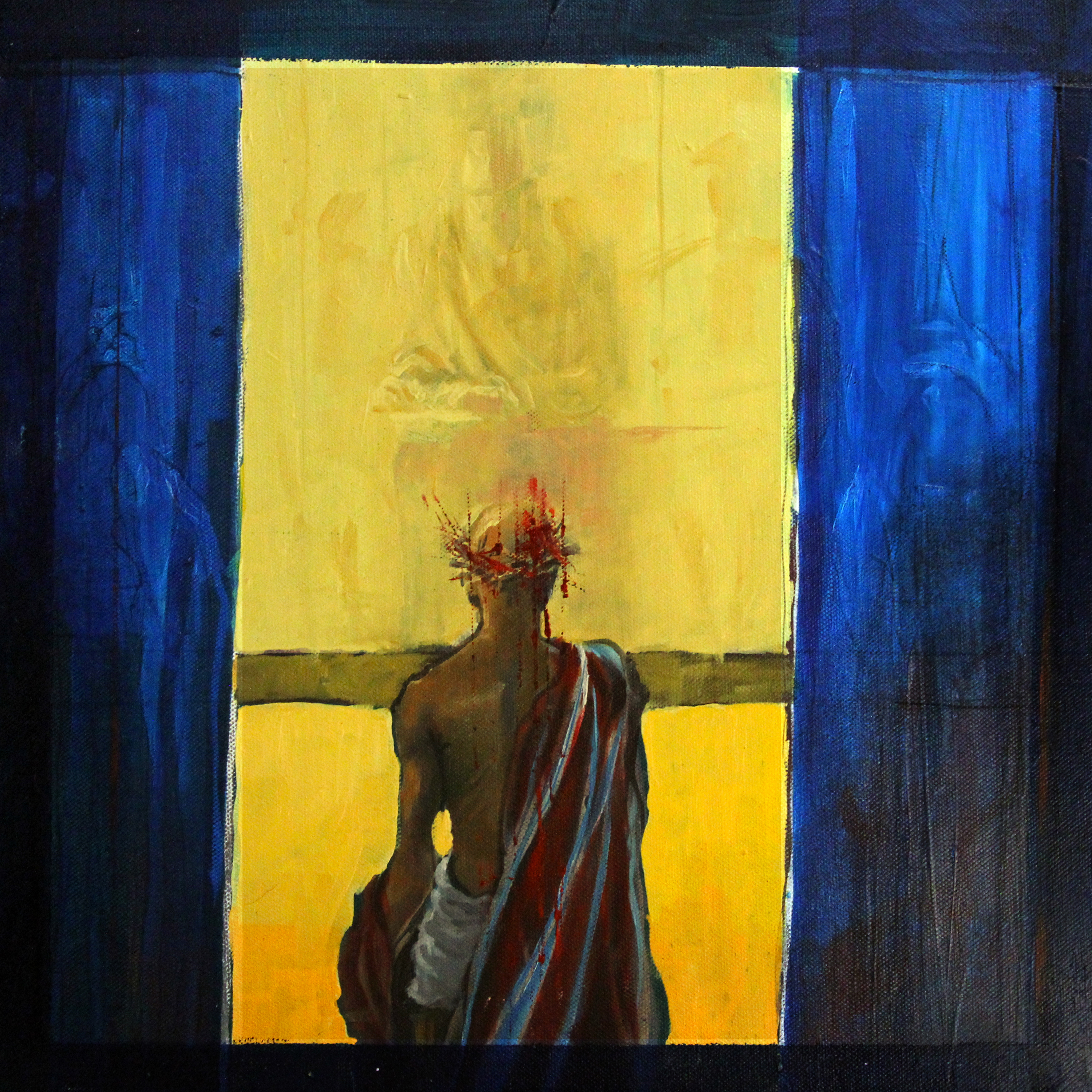
The Touch, Alan & Aaron Hicks. www.twinhicks.com

The Touch, Alan & Aaron Hicks. www.twinhicks.com


Welcome to Peace – we’re glad you’ve found us!

The 5th chapter of Mark’s gospel is all about healing. In today’s reading, a woman finds healing by touching Jesus’ cloak, and a girl is restored to life when he takes her by the hand. In both cases a boundary is crossed:  in Jesus’ time the hemorrhaging woman was considered ritually unclean, polluting others by her touch, and anyone who touched a corpse also became unclean. In Mark’s gospel Jesus breaks down barriers, from his first meal at a tax collector’s house to his last breath on the cross as the temple curtain is torn in two. We dare to touch Jesus in our “uncleanness” and to live as a community that defines no one as an outsider.

Our guest preacher is Rev. Chelsea Globe, Interim Campus Pastor at the University of Washington.  You can find a recording our the service HERE.

Join our worship Live Stream @ 9:30am on Jun 27 by clicking on our YouTube Channel.

A PDF of the worship guide can be downloaded here: Pentecost 8B 2021 6.27.21 livestream bulletin

Welcome to Peace – We’re glad you’re here.

duwamish-river-book TITLEAs part of our Season of Creation: Rivers series in June 2021, we asked author and river advocate BJ Cummings and Duwamish Tribal leader and riverkeeper James Rasmussen to share with us some of their deep knowledge and hard-won wisdom about Seattle’s only River–the Duwamish.  The result is the recording below.


For more information:
– About Creation Care at Peace Lutheran Church
– About our Creation Care Team

6.20.21 Cover artWelcome to Peace and the Season of Creation: RIVERS!

The great rivers of our land not only return the rain and snow back to the sea, they are life-bringing highways, concentrating and distributing nutrients, feeding wildlife, irrigating crops, transporting fish, and shaping the landscape; sources of the fresh water upon which all life depends.  Rivers are the circulatory system of Planet Earth.

In this third and final week of the series, we focus on one particular river, Seattle’s only river–the Duwamish.  To help us unpack this river’s complex and traumatic history and its possible future, we’re joined today by BJ Cummings, author of The River that Made Seattle, and James Rasmussen, Duwamish Tribal leader and Duwamish Superfund Manager.

Echoing the words of the prophet Ezekiel, St. John the Seer reveals God’s vision: The time is coming when creation will be restored, and a river, bright as crystal, will flow directly from God.  Trees of life will grow on either side of the river, bringing healing to all nations on Earth.  Jesus envisioned this river as the gift of the Holy Spirit, pouring like a stream from the heart of the believer.  What is your relationship with the streams and rivers that surround the place you live?

Our Live Stream Service for WEEK THREE of the RIVERS SERIES can be found HERE, beginning at 9:30am on 6/20/21.

A copy of the Worship Guide will be downloadable HERE: Creation 3B RIVERS 2021 6.20.21 livestream bulletin


Cedar River Watershed, source of Seattle's water

Cedar River Watershed, source of Seattle’s water

Welcome to Peace and the Season of Creation!

Each year we seek to connect the dots between our lives of faith and the natural world by focusing on one particular feature or system of creation.  In 2021 our focus is Northwest RIVERS in general and the DUWAMISH RIVER in particular.  Through liturgy, hymnody, and Scripture, wedded to images, and the voices of scientists, theologians, Tribal leaders, and river advocates, we explore the essential role that RIVERS play in shaping the Northwest landscape and our theological imagination.

The great RIVERS of this land not only return the rain and snow back to the sea, they are life-bringing highways, concentrating and distributing nutrients, feeding wildlife, irrigating crops, transporting fish, and shaping the landscape; sources of the fresh water upon which all life depends.  Rivers are the circulatory system of Planet Earth.

The Prophet Ezekiel envisions a sacred watershed whose waters flow in every direction from their source in God’s holy temple, enabling life on land and in water to thrive.  What is your relationship with the streams and rivers that surround the place you live?

In WEEK ONE (June 6),we learned how the symbiotic relationship between RIVERS and SALMON brought new life to this region after the last ice age, 17,000 years ago.  You can find the YouTube Recording of the service HERE. A PDF copy of the worship guide can be downloaded here: Creation 1B RIVERS 2021 6.6.21 livestream bulletin

In WEEK TWO (June 13), we were joined by Rev. John Rosenberg, who invited us to “think like a watershed.”  You can find a recording of that service HERE.  A PDF of the 6/13/21 Worship Guide can be downloaded HERE: Creation 2B RIVERS 2021 6.13.21 livestream bulletin

In WEEK THREE (June 20), we were joined by BJ Cummings, author of The River that Made Seattle, and James Rasmussen, Duwamish Tribal member and Duwamish Superfund Manager.  You can find a recording that service HERE.  A PDF of the 6/20/21 Worship Guide can be downloaded HERE: Creation 3B RIVERS 2021 6.20.21 livestream bulletin

The interview with BJ Cummings and James Rasmussen can also be viewed apart from the worship service HERE.

River flowingWelcome to Peace – we’re glad you found us!

During the 3-week Season of Creation: RIVERS we’re exploring the connection between rivers and our Christian faith.  The great rivers of our land not only return the rain and snow back to the sea, they are life-bringing highways, concentrating and distributing nutrients, feeding wildlife, irrigating crops, transporting fish, and shaping the landscape; sources of the fresh water upon which all life depends.  Rivers are the circulatory system of Planet Earth.

The author of Genesis puts life sustaining water at the heart of creation, and the Psalmist speaks of flowing water as the source through which God sustains all living things.  What is your relationship with the streams and rivers that surround the place you live?

In WEEK ONE (June 6),we learned how the symbiotic relationship between RIVERS and SALMON brought new life to this region after the last ice age.  You can find the YouTube Recording of theservice HERE. A PDF copy of the worship guide can be downloaded here: Creation 1B RIVERS 2021 6.6.21 livestream bulletin

In WEEK TWO (June 13)  we’ll be joined by Rev. John Rosenberg, Lutheran pastor and student of salmon and watersheds.

In WEEK THREE (June 20), we’ll be joined by BJ Cummings, author of The River that Made Seattle, and James Rasmussen, Duwamish Tribal member and Duwamish Superfund Manager.

We hope you’ll be with us for every twist and turn and bend!


River flowing“Glory to you for oceans and lakes, for rivers and streams. 

Honor to you for cloud and rain, for dew and snow. 

Praise to you for the Duwamish and Cedar and the glaciers that feed them;

for Longfellow and Fauntleroy Creeks, and the waters of the Salish Sea.

Your waters are below us, around us, above us: our life is born in you.

You are the fountain of resurrection.”

– Thanksgiving for Baptism

Beloved of God,

Rivers are on my mind these days.  And one river in particular: the Duwamish.  After reading BJ Cummings’ book:  THE RIVER THAT MADE SEATTLE: A Human and Natural History of the Duwamish, my eyes have been opened to the rich and tortured history of the Duwamish watershed and the people through time who have made it their home.  During the first three Sundays of this month we’ll be focusing our attention on the Duwamish and other watersheds and creatures that inhabit them, seeking to make connections to our faith lives during our SEASON OF CREATION: RIVERS.  And we’ll do so with the aid of special guests like watershed theologian John Rosenberg, author and river advocate BJ Cummings, and Duwamish Tribal leader and Superfund manager James Rasmussen.  We’ll go on a walking tour (June 12) along the Duwamish; we’ll visit Paulina Lopez of the Duwamish River Cleanup Coalition and learn about ongoing efforts to revitalize both the river and the communities that live adjacent to it.  Some of us will ply the river in kayaks and canoes!

The Duwamish, the Snoqualmie, the Skykomish, the Green, White, Black, Cedar and Tolt—these rivers have been ferrying fish, feeding fauna, and shaping the Westside landscape for many thousands of years.  The names themselves remind us that Native Communities had to come to terms with their seasonal behavior over thousands of years before new immigrants started calling this region home. The great rivers of this land not only return the rain and snow back to the sea, they are life-bringing highways, concentrating and distributing nutrients, feeding wildlife, irrigating crops, transporting fish, and shaping the landscape; they are the sources of the fresh water upon which all life—including our own—a depends.

In our short-sighted zeal to master rivers for human industry we have turned vital streams of life into noxious streams of death.  Industrial wastes, pesticides, fertilizers, prescription medications, leaking oil and sewage run off each contribute toxic ingredients to the mix, polluting the very marine estuaries that enable complex and complimentary life forms to thrive.  Earthkeeping calls us to a renewed understanding of our relationship to the rivers and waters of our region, and it all starts in our own backyard.  What is your relationship with the rivers and watersheds in the place you live?  This is what we’ll be exploring with the help of special guests over the first three weeks in June.

“Rivers,” says James Rasmussen, “are living things.”  The stories they tell are complex.  Our lives of faith are also complex, and too often have been lived at a remove from the natural world around us.  To be a living thing, faith must meet the challenge of the time in which it is lived.  Linkages must be made between our sacred traditions and the natural processes of the living planet we call HOME.  This is the great work of faith to which we are being called in our time.

Plenty has gone wrong with the Duwamish over the past 165+ years, culminating in the river becoming a Superfund cleanup site in 2001.  But as Eric Wagner points out, while the Duwamish may be a dirty river, a ransacked, violated and neglected river, it is not a dead river.  In his book, ONCE AND FUTURE RIVER: RECLAIMING THE DUWAMISH, Wagner writes:

“There is abundant loss and disconnection to be found.  Yet every time I settle into a kayak or wading boots and push off and away from the city’s hard ground, into the flow of  the Duwamish River, it feels like belonging… To see the evidence of injurious human choices that have been made during the past hundred years is to wonder what whose people were thinking and whether we are much different.  But to accept the evidence that wildlife and plants and people are at home on the river these days is to allow ourselves wonderment… In its present state, [the Duwamish] embodies the tensions between man-made and natural, between competing visions for the future, between dying and living.” [1]

I hope you’ll join us each week for this series—and tell a friend, too.

With you, on the Way,

Pastor Erik

[1] Essay by Eric Wagner (University of Washington Press, 2016) https://www.seattletimes.com/pacific-nw-magazine/reclaiming-the-duwamish-river-is-about-reclaiming-ourselves-theres-a-lot-left-to-save/